
What do family office advisers look for in private market managers?
What do family office advisers look for in private market managers? They look for a professional, trustworthy partner who can deliver performance and justify illiquidity. The manager must pass rigorous due diligence on their team, process, and terms. A specialist focus, a defensible competitive position, and a value-add ecosystem around the fund are key factors that make a manager stand out.
The core criteria for manager selection
Family office advisers act as gatekeepers and fiduciaries. Their primary job is to protect and grow the family's capital while managing risk. When evaluating a private market manager, they start with the fundamentals.
First, the manager must demonstrate a clear ability to generate returns. Performance is the baseline expectation. However, in private markets, performance alone is not enough. The manager must also justify the illiquidity and long lock-up periods inherent to the asset class. This means showing a repeatable, disciplined investment process that can weather market cycles.
Second, the manager and their firm must pass the office's due diligence process. This is a deep dive into the team's background, track record, investment thesis, operational infrastructure, and legal and compliance history. Advisers look for consistency, transparency, and professionalism at every level.
What makes a manager institutional quality
Institutional quality is a standard that signals a manager is serious, stable, and prepared for large, sophisticated capital. You don't need to be raising from pension funds to benefit from this standard. As Richard Wilson notes in his training, "you always want to be a half notch above where you need to be appealing for capital because then the capital will come in faster." This preparedness means you are ready when a major family office shows interest.
Key signs of institutional quality include professional communication, responsiveness, and the ability to act well under pressure. It's about presenting a consistent, high-integrity operation. As Wilson puts it, "people want to like you, trust you, and see you as a class act professional that's gonna do the right thing and is high integrity."
The advantage of a focused specialist
A common thread among successful managers is a narrow, deep focus. Greg, a family office professional featured on Billionaires.com, points to a manager's "moat" as a key attraction. He gives the example of a defense industry buyout group whose partners hold security clearances - a specialized access barrier that creates a defensible advantage.
This aligns with a broader principle: competing against larger, generalized firms requires focus. As Wilson explains using an analogy from Brian Tracy, a focused disposable camera can take a better picture than an unfocused $80,000 camera. A manager who focuses on "the most valuable area of the market or a strategy that's growing the fastest" can compete effectively against larger players who are slow to move.
The importance of ecosystem and value-add
Beyond the investment thesis, advisers look for a manager's ability to add value to portfolio companies. Greg highlights "ecosystem" as a factor that excites him. This refers to the network of advisers, industry experts, and operational partners a manager can bring to help a company accelerate its growth. A manager with a powerful ecosystem is not just providing capital, they are providing a strategic advantage.
Terms, platform, and fit
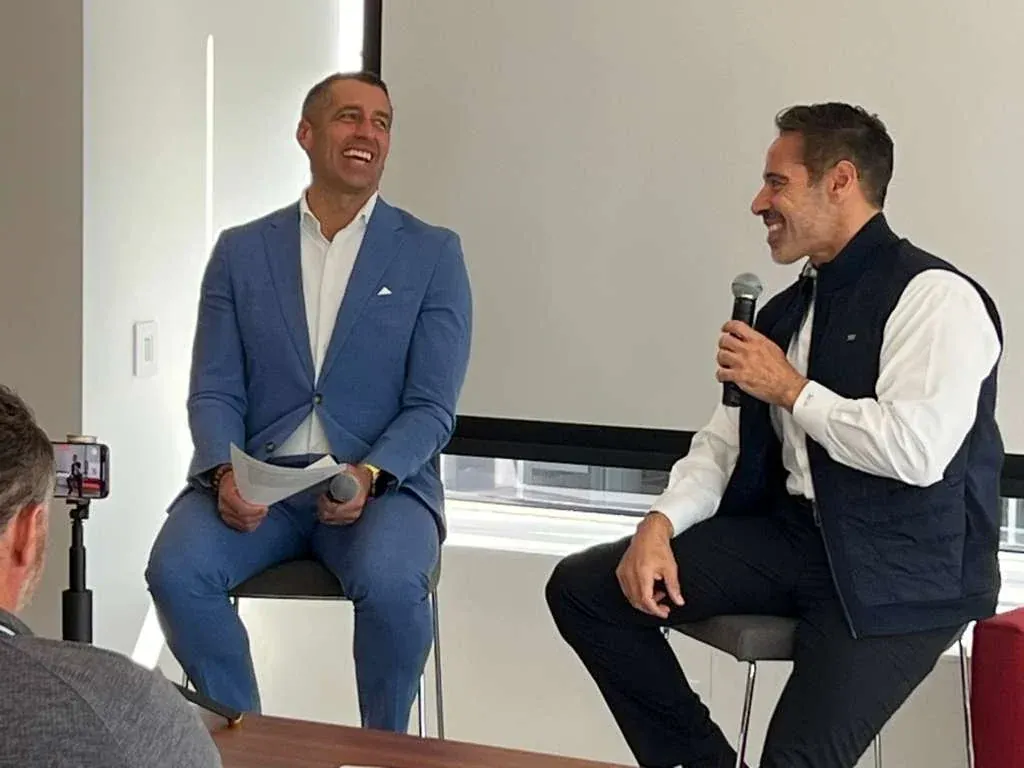
Practical considerations are critical. Isaac, another adviser on the panel, notes that after initial meetings, his team scrutinizes the fund's terms, size, and platform structure. Terms must be aligned with the risk and illiquidity profile. The fund size must be appropriate for the strategy - too large can dilute returns, too small may not cover costs. The "platform" refers to the firm's overall operational capability and scalability. These factors determine if a manager is a fit for the specific needs and constraints of the family office's clients.
A checklist for private market managers
For managers seeking capital from family offices, here is a practical checklist based on what advisers prioritize.
- Demonstrate a defensible focus. Be the expert in a specific niche, geography, or strategy. Articulate your competitive moat clearly.
- Build a value-add ecosystem. Develop and showcase a network of resources you can deploy to help portfolio companies succeed beyond the check.
- Operate at institutional quality. Ensure every touchpoint - from communications to reporting to crisis management - is professional, responsive, and transparent.
- Justify your terms. Be prepared to explain how your fund's fee structure, carry, and liquidity terms align with the strategy and investor interests.
- Pass deep due diligence. Have your track record, team bios, legal documents, and operational procedures organized and ready for intense scrutiny.
- Show platform strength. Demonstrate that your firm has the infrastructure, team depth, and scalability to execute the strategy consistently.
- Communicate your process. Articulate a clear, repeatable investment process that shows how you source, vet, execute, and manage deals.
Related questions
- How Founders Can Operate at a Family Office Level
- Family Office Creation Case Studies and Lessons
- Legal and Governance Risks for Family Office Wealth
Related resources
- Family Offices and the Ultra-Wealthy
- Billionaires over time (infographic)
- Top billionaire countries (infographic)
- All billionaire interview videos
- The biggest questions about billionaires
Informational only, not financial, legal or tax advice.

From Richard's exclusive Billionaires.com interviews
Lessons from Richard C. Wilson's one-on-one interviews, as published on each interview page.
- Anu Aga: Focus on one main cause. Her family found its giving more satisfying and impactful once it chose primary education for the underprivileged in India.
- Binod K. Chaudhary: Never chase a deal out of desperation. Stay cool and look at every part of the deal. Have your advisers and your finance team review it critically. Your counsel should review it too.
- Larry Connor: Learn from every mistake. Larry's team owns its failures and makes no excuses. They learn, change quickly, and keep getting better.
See the data
Sources
Quotes are copied from the video captions and checked against the transcript. Timestamps link to the moment in the video. General information only, not legal, tax or investment advice.