
How can investors build deal relationships at family office events?
To build deal relationships at family office events, focus on listening first, making a clear and concise introduction, and adding value without taking too much of someone's time. The goal is to plant a seed for a real relationship, not to close a deal on the spot. Consistent attendance over 18 to 24 months helps you learn the structures and preferences of the investors you meet.
The point of coming to an event is to build a real relationship, not to try to close somebody right now here today. You have to get to know someone and plant a seed and grow a relationship over time.
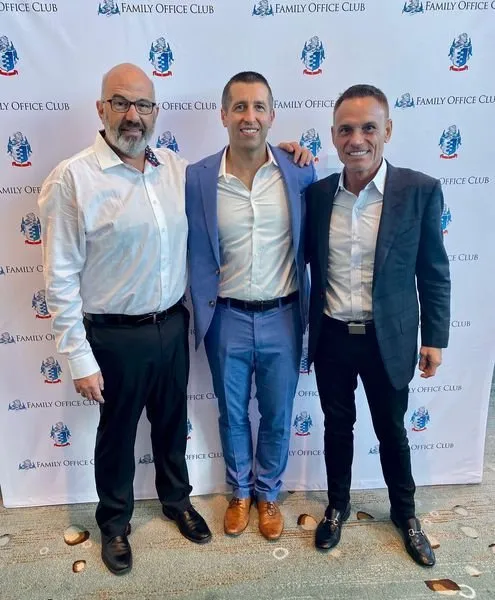

Listen for the fit
Investors on stage describe what they're investing in, what they're looking for, and how they structure deals. Working the room can mean missing someone on stage who describes the exact fit you need. Pay close attention to these presentations. They are your best guide for identifying who you should approach and how to tailor your conversation.
Make a clear introduction
When you do approach someone, use a concise one-liner that tells people who you are and why you'd like to meet. Be specific. Instead of saying "I'm in real estate," say "I source off-market multifamily deals in the Southeast and I heard you mention you're looking for that." This clarity respects their time and immediately shows a potential connection.
Find a partner who can help you grow
Look for a balance sheet partner, a co-GP, a joint venture partner, or a systematic capital partner. These are relationships that can help you scale. An event is a place to identify these potential partners by listening to their stated objectives and investment criteria.
Build the relationship by adding value first
Be kind and polite, and keep conversations concise. If you meet someone valuable, don't corner them for 20 minutes. Hundreds of people are there to meet. Think about what you can offer them right now. It could be an article, an introduction to someone else in the room, or a piece of market data. Adding value first builds trust.
Look for ways to reach more investors
Think about distribution partners who can help you access hundreds of investors at once. This could be a fund of funds, a consultant, or a platform. While you're building one-on-one relationships, also be on the lookout for these leverage points that can amplify your efforts.
Be politely persistent over time
Follow up. If someone says no, it's okay to politely ask why. Is it the structure, the timing, the location? Understanding their "no" can help you refine your approach or know when to circle back later. Real relationships are built through consistent, respectful follow-up, not a single pitch.
A practical checklist for family office events
- Prepare your one-liner. Write down a clear, specific introduction that states who you are and what you do.
- Target before you arrive. Review the speaker and attendee list. Identify 5-10 people you want to meet based on their published interests.
- Listen more than you talk. In sessions and conversations, focus on understanding the other person's goals and needs.
- Lead with value. Have a few pieces of useful information or potential introductions ready to offer.
- Respect time. Keep initial conversations to 5-7 minutes unless the other person clearly wants to continue.
- Take notes. After a conversation, jot down key points for a personalized follow-up email.
- Follow up within 48 hours. Send a brief email referencing your conversation and next steps, if any.
Related questions
- How to Use an Investor Summit
- How can a startup get in front of family office investors?
- How Wealthy Connections Shape Deal Structures
From Richard's exclusive Billionaires.com interviews
Lessons from Richard C. Wilson's one-on-one interviews, as published on each interview page.
- Fran Tarkenton: Get in the game. As a third string college quarterback, he put himself into a game and led a scoring drive. You cannot make things better from the sidelines, he says.
- Michael Lee-Chin: Find the person who is responsible. When a problem comes up, he asks who the agent was. He wants a specific person to call, not a department.
- Tony Robbins: Think like an owner. His biggest turning point was moving from operator to owner. An operator tries to supervise everything and cannot scale.
See the data
Sources
Quotes are copied from the video captions and checked against the transcript. Timestamps link to the moment in the video. General information only, not legal, tax or investment advice.